-
Services
- PLAN
- BUILD
- SCALE
-
Products
- Automatic Tagging
- Search & Discovery
- Content Moderation
- Case studies
- Company
- Blog
- Pricing
- Let's talk
Case Study
Company |
Industry |
 |
Healthcare |
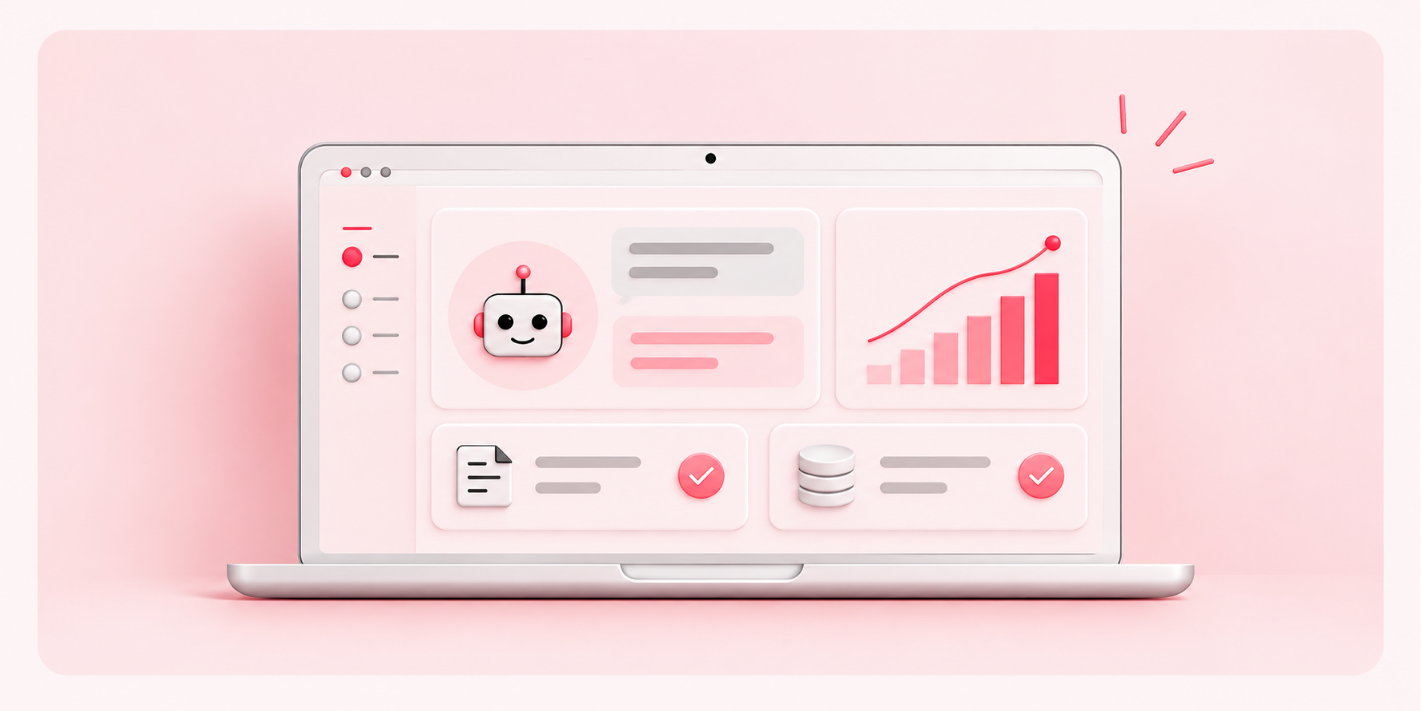

The client is a software development company that builds solutions for healthcare providers and insurance companies. Its platform helps healthcare organizations automate routine administrative interactions and improve workflows using AI voice agents and system integrations.
The client already had an AI platform in place and brought in Velebit AI to strengthen its AI capabilities, improve model performance, and make the system easier to monitor and optimize.

We helped improve the client’s existing AI automation platform, making its voice agents more reliable across different healthcare workflows and easier to continuously optimize.
What changed?

The client had already developed a platform designed to automate repetitive administrative workflows for healthcare providers. Its AI voice agents could handle routine interactions, but the underlying AI needed further optimization to perform reliably across a wide range of real-world scenarios in healthcare.Healthcare providers spend significant time on repetitive administrative tasks, from verifying insurance coverage and scheduling appointments to managing treatment renewals.
These processes often involve multiple systems and different requirements depending on the healthcare provider and insurance company. Routine interactions can therefore require considerable manual communication and coordination, taking time away from other work.
The client had strong software engineering and infrastructure capabilities, but needed additional specialized AI expertise to improve the existing AI layer and establish a more effective process for evaluating and optimizing its performance.


Rather than building a new platform from scratch, Velebit AI had to work within an existing product and improve the AI components already powering it. This required understanding the existing architecture, workflows, tools, and interaction patterns, then identifying where changes to the AI behavior could have the greatest impact.
The system needed to support different clinics, insurance providers, and types of administrative interactions. There was no single template that could reliably cover every scenario. The team therefore needed to continuously experiment with how the AI was prompted and how information was provided depending on the context of each interaction.
Better logging and analysis were needed to make the system’s performance easier to evaluate and improve.
Velebit AI improved an AI workflow platform combining voice agents, intelligent process automation, and system integrations.
The work focused on improving the AI agent’s ability to handle different stages of a conversation and adapt to the context of each interaction. Prompting was refined so the model received the most relevant information at the right point in the workflow, rather than being given all available information at once.
Another important part of the solution was improving how AI interactions were analyzed. Structured logging and additional metadata made it easier to understand what happened during a call, identify recurring issues, and evaluate the performance of different workflows.
The project followed an iterative approach. The team continuously reviewed results, identified areas for improvement, and adjusted the AI workflows based on different types of healthcare interactions. This allowed the solution to evolve around the real-world requirements of the client’s platform.
 Python
 Pytorch
 ElevenLabs
 Hamming AI
 Metabase
 Speechmatics

The improved AI workflow increased successful processing performance. By improving the AI agent’s ability to understand context and work with information from connected systems, the platform became better equipped to handle different healthcare workflows. Improved logging and structured analysis also gave the client greater visibility into AI performance, making it easier to identify issues and continuously optimize the system.
The result is a more capable and reliable AI automation platform that helps reduce administrative workload while providing a scalable foundation for more efficient healthcare operations.